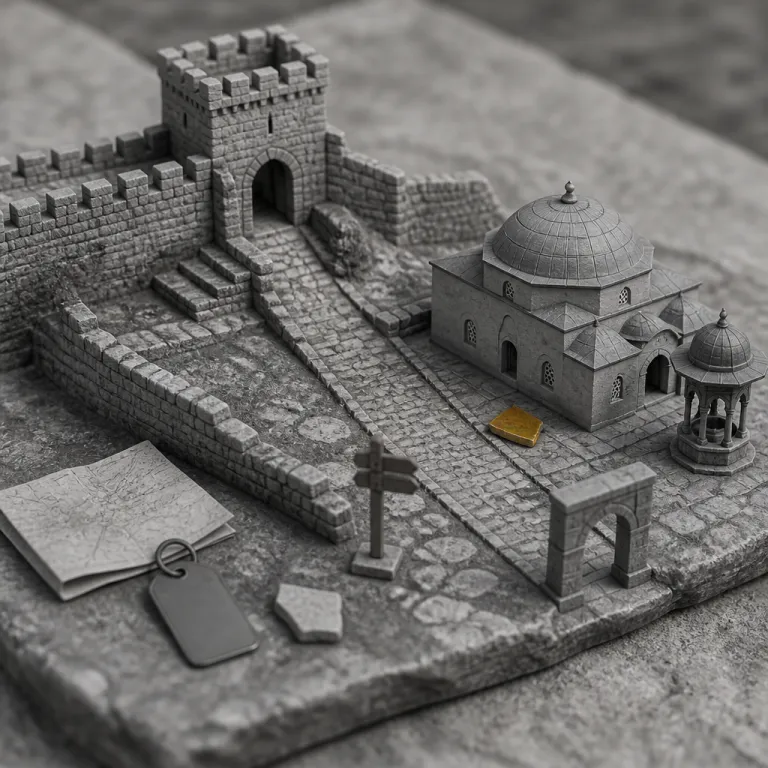
Why a Belgrade Ottoman history tour belongs on a luxury itinerary
Belgrade rewards travelers who look beyond the obvious postcard views. A carefully curated Belgrade Ottoman history tour adds depth to a stay in a premium hotel, turning the city into a layered open air archive of empires and everyday life. When you align your walking schedule with the rhythm of the streets, the historical narrative starts to feel as considered as a well designed suite.
The Serbian capital was once a frontier city between the Ottoman Empire and the Austro Hungarian world, and that tension still shapes its visible architecture and urban mood. A tailored tour in Belgrade that follows Ottoman period traces will reveal how the fortress, mosques, hammams and residential quarters once formed a coherent city within walls. For luxury travelers, this context transforms a standard walking tour into a private seminar in power, faith and trade, best experienced with a tour knowledgeable guide who understands nuance.
High end hotels in Belgrade increasingly recognise that guests want more than spa access and river views. Concierge teams will now arrange a bespoke Belgrade Ottoman history tour that starts directly from your lobby, with a clear starting point, a defined meeting location and a flexible route that still respects your schedule. The tour takes you through districts where Ottoman and Austro Hungarian influences overlap, and the walk often takes hours yet feels surprisingly light when punctuated by coffee stops and curated viewpoints.
Kalemegdan and Belgrade Fortress: reading the frontier between empires
Your Ottoman themed walking tour should begin at Kalemegdan, where Belgrade Fortress crowns the confluence of the Sava Danube rivers. This historic fortress in Belgrade with Ottoman heritage once controlled the key pass between Central Europe and the Balkans, and its ramparts still frame the city like a stone prologue. A private guide will help you walk the site slowly, treating each tower and gate as a chapter in a long frontier story.
Kalemegdan Fortress was a key Ottoman stronghold from 1521 to 1867, and that long Ottoman period left traces that sit beside Austro Hungarian and Serbian layers. Within the upper fortress, Damat Ali Pasha's Mausoleum and the former Kale Hammam, now a planetarium, offer rare Ottoman civil structures in a city that largely rebuilt itself. When you visit historic corners of the complex, the contrast between military walls and quiet tombs reveals how empire, faith and everyday life once coexisted inside the same stone envelope.
A well designed tour in Belgrade Fortress usually follows a loop that starts near the main park entrance and then descends toward the Sava Danube viewpoint. The point tour often includes a pause near the military museum, where your tour knowledgeable guide can explain how the Ottoman Empire and the Austro Hungarian monarchy fought repeatedly over this same city. As you walk along the ramparts, the visible architecture shifts from Ottoman to later European styles, and that gradual change helps you read Belgrade as a palimpsest rather than a single era.
From Republic Square to Kosančićev Venac: Ottoman street grids and urban memory
Leaving the fortress, your Belgrade Ottoman history tour should thread through the modern city center toward Republic Square. This busy meeting location, framed by the National Museum and National Theatre, now feels entirely European, yet it once sat close to the edge of the Ottoman era town. A thoughtful walking route will use this contrast to show how the city shifted from an oriental trading hub to an Austro Hungarian influenced capital.
From Republic Square, a good walking tour in Belgrade will lead you down quieter streets toward Kosančićev Venac, one of the few neighborhoods where the old Ottoman street grid still whispers beneath later reconstructions. Here, the streets curve and narrow, and the visible architecture mixes modest houses with grander Austro Hungarian facades, reflecting centuries of layered investment. As you walk, your guide can point out where Ottoman shops once lined the cobbles, and how everyday life changed when new powers redrew the map.
Kosančićev Venac works particularly well for travelers staying in luxury hotels nearby, because the tour takes only a short walk from most central properties. The starting point can be tailored to your residence, and the point tour can be extended to include riverside cafés overlooking the Sava Danube confluence. This part of the city rewards slow walking, and a tour knowledgeable guide will often suggest a Turkish style coffee stop, turning the history lesson into a sensory pause.
Princess Ljubica’s Residence and the last hammam: interiors of a changing city
To understand how Ottoman and Serbian elites navigated change, include the Residence of Princess Ljubica in your Belgrade Ottoman history tour. This elegant townhouse sits a short walk from Kosančićev Venac, and it bridges the late Ottoman period and the rise of modern Serbian rule. Inside, the rooms show how a princess and her household balanced Ottoman interior traditions with emerging European tastes.
A curated tour in Belgrade that includes Princess Ljubica’s Residence will highlight details such as low seating, carpets and decorative woodwork that echo Ottoman domestic aesthetics. The residence of Princess Ljubica also reveals how visible architecture can signal political transition, with façades leaning toward Austro Hungarian styles while interiors retain Ottoman comfort. For luxury travelers used to refined hotel suites, these rooms feel surprisingly familiar, turning a museum visit into a dialogue between past and present hospitality.
From here, your walking tour should continue toward Dorćol, where one of the last Ottoman hammams in the city survives as a cultural venue. This former bathhouse, sometimes called Kale Hammam, now functions as a planetarium, yet its domes and interior layout still speak clearly of the Ottoman Empire’s urban infrastructure. A tour knowledgeable guide will explain how such hammams once structured everyday life, and how their loss reshaped the social fabric of Belgrade year round.
Designing your own walking tour: routes, hotels and refined pauses
For guests booking luxury hotels in Belgrade, the key is to weave the Ottoman themed walking tour seamlessly into a broader city stay. Many five star properties will arrange a private guide, set a convenient starting point near your lobby and ensure the tour takes a comfortable pace that respects your preferences. In practice, the full walk usually takes hours, but a well planned itinerary feels like a series of curated scenes rather than a forced march.
A classic route begins at Republic Square, continues through Knez Mihailova, enters Belgrade Fortress, then loops down toward Kosančićev Venac and Dorćol before ending near the last hammam. This tour in Belgrade can be adapted for families or solo travelers, and those visiting with children may appreciate cross referencing family friendly hotel options on a dedicated guide to luxury hotels that take families seriously. Along the way, your guide will suggest refined stops for Turkish coffee, regional sweets and contemporary Serbian cuisine that nods subtly to Ottoman heritage.
Because Belgrade’s climate allows for city walks almost year round, you can schedule your Belgrade Ottoman history tour in any season, adjusting the duration and intensity. A tour knowledgeable guide will manage meeting times, adjust the point tour if weather shifts and ensure that each pass through a district adds new layers to your understanding. By the time you return to your hotel, the streets, towers and river views will feel less like anonymous scenery and more like a living archive of empires, resistance and resilient everyday life.
FAQ
What is Kalemegdan Fortress and why is it central to Ottoman Belgrade?
Kalemegdan Fortress is Belgrade’s primary historic stronghold, positioned above the Sava Danube confluence. It served as a key Ottoman stronghold for centuries, making it essential to any Belgrade Ottoman history tour. The complex combines military walls, a mausoleum and a former hammam, offering a concentrated view of the city’s frontier role between empires.
Is the Kale Hammam open to the public during a walking tour?
The former Kale Hammam in Belgrade is open to the public and now operates as a planetarium. While its function has changed, the domed structure and internal layout still reflect its Ottoman period origins. Including it in a walking tour allows visitors to see how heritage buildings can be adapted while preserving their historical character.
Are guided Ottoman themed tours available in Belgrade year round?
Guided Ottoman themed walking tours are available in Belgrade throughout the year, with routes adjusted for weather and daylight. Many licensed guides specialise in Ottoman history and can tailor the itinerary to your interests and hotel location. Booking through a luxury hotel concierge often ensures a tour knowledgeable guide and a seamless meeting arrangement.
How long does a typical Belgrade Ottoman history tour take?
A comprehensive Belgrade Ottoman history tour that includes Belgrade Fortress, Republic Square, Kosančićev Venac, Princess Ljubica’s Residence and the last hammam usually takes several hours on foot. The exact duration depends on your walking pace, the number of interior visits and coffee or meal stops. Private tours can be shortened or extended, but most travelers find a half day format ideal.
Do I need special clothing or preparation to visit Ottoman sites in Belgrade?
For most outdoor sites such as Belgrade Fortress and Kosančićev Venac, comfortable walking shoes and weather appropriate clothing are sufficient. When visiting active religious sites like the Bajrakli Mosque, modest dress is recommended, with shoulders and knees covered. Checking opening hours in advance and carrying water will make the walking tour more comfortable, especially in warmer months.
References: Serbian National Tourism Organisation ; Belgrade City Museum ; Institute for the Protection of Cultural Monuments of Serbia.