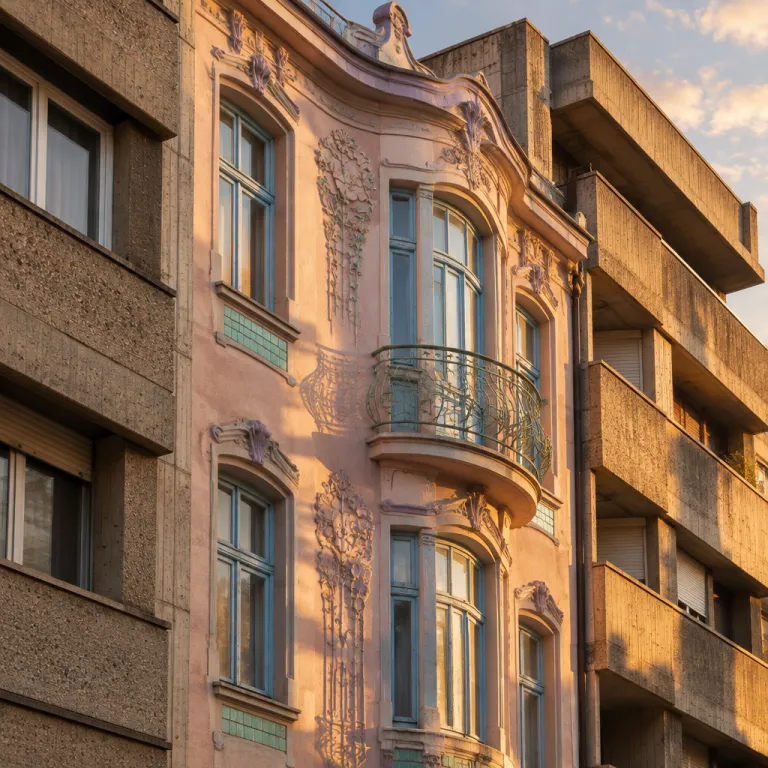
The early century moment: when Secession reshaped Belgrade streets
Belgrade looks unapologetically concrete at first glance, yet the early century left a quieter layer of elegance. In that period the city shifted from an Ottoman frontier town toward a modern Serbian capital, and a wave of European Secession and art nouveau architecture arrived with surprising confidence. For travelers who care about design, this moment still shapes how every palace, cooperative building and hotel frames the urban experience today.
Architects trained in Central Europe brought the Secession style to Serbia, then folded it into a distinct serbian art language. They worked on each building as a manifesto, balancing national ambition with cosmopolitan taste in façades, windows and wrought iron balconies. This is where belgrade art nouveau architecture becomes more than decoration ; it is a record of how Serbia imagined its place between Vienna, Budapest and the byzantine heritage of the Balkans.
Walking through the main streets of Stari Grad, you move between layers of architecture Belgrade rarely advertises. One corner holds a neo Byzantine church silhouette, the next a serbo Byzantine inspired palace, and then suddenly a narrow house with floral stucco and curved window frames. The tension between these styles gives belgrade art its particular charge, especially for couples who like their hotel stays framed by real urban stories rather than generic luxury.
Reading the facades: motifs, materials and the play of decay
To understand belgrade art nouveau architecture, slow your pace and start reading façades like pages. Look for asymmetrical compositions, sinuous lines and plant motifs that climb around each window, often executed in pale plaster that has weathered beautifully. On many buildings the wrought iron railings carry the most expressive art nouveau curves, while the stone below shows the scars of a city that has lived hard.
Some of the most intriguing architecture Belgrade offers sits in this tension between refinement and patina. A cooperative building may have been designed as a proud national statement, yet today its stucco peels and the wrought iron balconies lean slightly over the street. For many travelers this contrast feels more honest than a perfectly restored palace, especially when your hotel room looks directly onto these early century survivors.
Details reward patience on every street in the historic core of Belgrade. You will notice stylized female faces above a doorway, a serbian academy emblem tucked into a pediment, or a byzantine revival cross discreetly placed within an otherwise Secession façade. This is where the city’s reputation for brutalism softens, and where a walk between art nouveau buildings pairs naturally with a later dive into a brutalist Belgrade architecture walk for a complete design narrative.
Streets and landmarks: where to walk for Art Nouveau Belgrade
The most rewarding route for belgrade art nouveau architecture begins around Terazije and flows down toward the river. Start near Hotel Moskva, a landmark hotel whose façade mixes Secession curves with serbo Byzantine touches, then follow the gentle slope toward the Sava. From here you can stitch together a sequence of buildings that reveal how architecture Belgrade absorbed European trends while keeping a distinctly Serbian voice.
Continue along Kralja Petra street, one of the main axes where early century architects experimented with style. On this street and the nearby grid you will find the famous Vuco House, the Stamenković House and other residential buildings that show how a single house could carry both national motifs and cosmopolitan art nouveau ornament. Each building was designed to stand out from its neighbors, yet together they form a coherent narrative of Serbia stepping into modernity.
Make time for the Belgrade Cooperative building in the Savamala district, a former cooperative palace that now anchors the riverside story of belgrade art and commerce. From there, cross the river to explore the modernist grid using a New Belgrade modernist masterplan walking guide, then return to the old centre for dusk light on the Secession façades. Couples staying in a central hotel can easily turn this into a half day loop, with coffee stops and short detours into side streets where lesser known architecture in Belgrade still hides.
Architects, hybrids and the dialogue with Byzantine revival
Names matter when you start to decode belgrade art nouveau architecture, because each architect carried a different agenda. Nikola Nestorović and Andra Stevanović, for example, often worked together on major public buildings that blended national pride with Secession elegance. Branko Tanažević pushed further into serbo Byzantine and neo Byzantine territory, weaving byzantine revival domes and patterns into otherwise modern compositions.
These architects did not treat art nouveau as a fixed style but as a flexible language. One cooperative building might lean heavily on floral stucco and curved window frames, while another palace would emphasize national symbols and byzantine crosses. The result is that architecture Belgrade from this era rarely feels imported ; it feels negotiated, as if each house and hotel were designed to balance Serbia’s Orthodox heritage with its European aspirations.
Look closely at the façades near the Serbian Academy of Sciences and Arts, where several buildings show this hybrid approach. You may see a byzantine inspired arch sitting above an art nouveau balcony, or a serbian national emblem framed by wrought iron in a Secession pattern. For design minded travelers, this mix makes every street a kind of open air seminar in how Serbia translated foreign movements into its own architectural grammar.
From telephone exchanges to hotels: staying inside the story
Some of the most atmospheric examples of belgrade art nouveau architecture are not grand palaces but working buildings. The old telephone exchange structures, for instance, often combined strict functional plans with playful Secession façades that softened their industrial role. When you pass these buildings today, imagine the early century hum of new technology behind those ornate windows and wrought iron grilles.
Residential houses from this period also tell intimate stories about how Belgrade’s middle class wanted to live. A Vuco House apartment or a Stamenković House stairwell would have signaled both modern comfort and alignment with European art trends, while still nodding to serbian tradition in small byzantine details. For couples choosing a hotel in the historic centre, proximity to these streets means your morning walk becomes a direct encounter with how architecture Belgrade once framed everyday life.
Many luxury and premium hotels now reference this heritage in subtle ways, even when they occupy later buildings. A lobby might echo the curved lines of art nouveau railings, or a suite window might frame the dome of Saint Sava rising above a cluster of Secession façades. Staying in a design led hotel near these streets lets you move easily between belgrade art, riverside brutalism and the layered nightlife that unfolds just a few blocks away.
Planning an architecture focused stay: routes, cafés and romantic pauses
To weave belgrade art nouveau architecture into a romantic stay, think in terms of slow routes rather than checklists. Choose a hotel within walking distance of Kralja Petra street, Hotel Moskva and the Belgrade Cooperative building, so that early century façades become part of your daily rhythm. From there you can design gentle loops that pass key houses and public buildings, then end at a café terrace where the city’s layered architecture becomes your backdrop.
One elegant circuit starts at a terrace near the Serbian Academy, continues past several Secession buildings and then dips into the cobbled lanes of Skadarlija. For a deeper sense of the area’s character, pair your walk with this guide to what Belgrade’s bohemian quarter actually offers, then return uphill as the light softens on the façades. Along the way you will notice how byzantine revival churches, serbo Byzantine details and art nouveau balconies coexist within a few hundred metres.
Another route links Saint Sava, several neo Byzantine landmarks and nearby residential streets where quieter examples of architecture Belgrade still survive. Here the contrast between monumental domes and modest houses with curved windows creates a particularly intimate scale for couples. End the day with a drink in a hotel bar that looks onto these streets, letting the mix of national motifs, Secession lines and brutalist silhouettes frame your final view of the city.
FAQ
Where should I stay to explore Belgrade’s Art Nouveau architecture on foot ?
Choose a hotel in Stari Grad or around Terazije, ideally within a short walk of Kralja Petra street, Hotel Moskva and the Belgrade Cooperative building. From these areas you can reach most key art nouveau and Secession façades on foot, while also having easy access to byzantine revival churches and modernist districts. This central location keeps taxi rides minimal and lets you experience the architecture at different times of day.
Which buildings best represent Belgrade’s Art Nouveau and Secession style ?
Hotel Moskva, the Belgrade Cooperative building and the Vuco House are among the most emblematic examples of belgrade art nouveau architecture. Around Kralja Petra street you will also find the Stamenković House and several residential buildings with ornate windows and wrought iron balconies. Together they show how architecture Belgrade blended European Secession with serbian national and byzantine motifs.
How does Belgrade’s Art Nouveau relate to its Byzantine and brutalist layers ?
Belgrade’s early century Secession and art nouveau buildings sit between older byzantine revival churches and later brutalist housing blocks. This creates a rare dialogue where serbo Byzantine domes, national symbols and modern concrete all appear within a short walk. Exploring these layers in sequence gives a clearer sense of how Serbia moved from an Ottoman frontier to a modern capital.
Can I combine an Art Nouveau walk with other architecture routes in Belgrade ?
Yes, the compact centre makes it easy to link belgrade art nouveau architecture with modernist and brutalist routes. Many travelers start with Secession façades around Stari Grad, then cross the river to explore New Belgrade’s modernist grid before returning to the old streets at dusk. Booking a centrally located hotel simplifies this, allowing you to move between very different architectural moods in a single day.
Is Belgrade’s Art Nouveau architecture well preserved ?
Preservation varies, and part of the appeal lies in this uneven condition. Some key buildings such as Hotel Moskva and the Belgrade Cooperative palace have been carefully restored, while many residential houses show peeling stucco and weathered wrought iron. For design minded visitors, this mix of restoration and patina offers a more nuanced and authentic view of architecture Belgrade than a fully polished open air museum.
Suggested sources for further reading : National Library of Serbia, Museum of Applied Art in Belgrade, and the official website of the Institute for the Protection of Cultural Monuments of Serbia.